
A lost master key can create far more work than replacing a lock. It can mean changing cylinders throughout the building, issuing new keys, accounting for old copies and wondering who may still have access. For a busy office, warehouse, workshop or multi-site operation, that is unnecessary disruption.
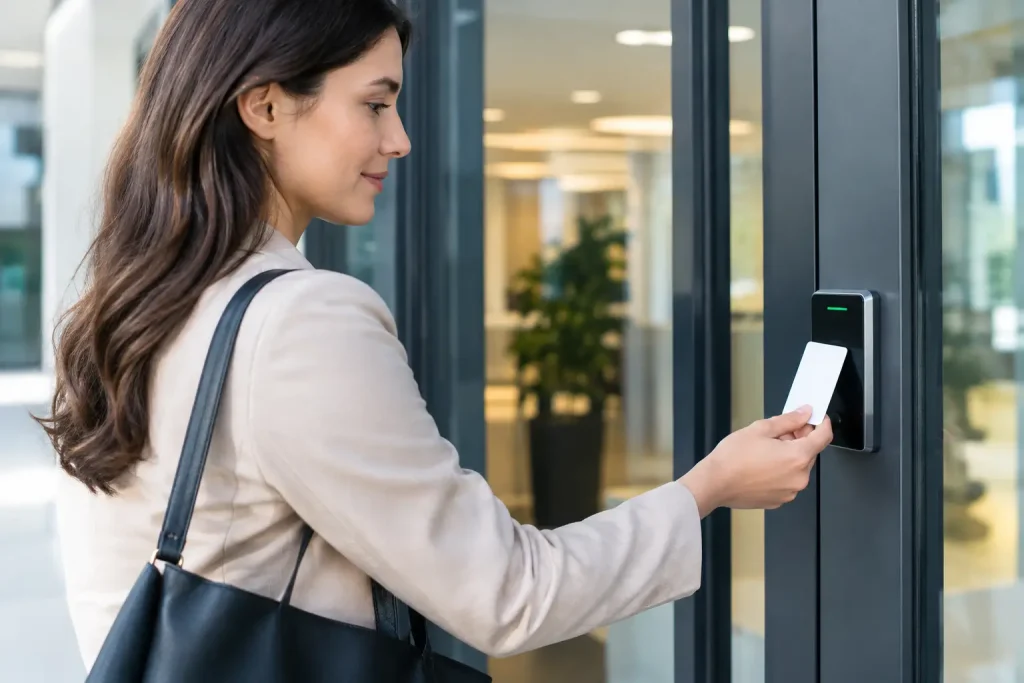
Access control systems replace uncertainty with clear, manageable control. Instead of relying solely on physical keys, authorised people can enter designated areas using cards, fobs, PINs, mobile credentials or biometric readers. Access can be changed in minutes, activity can be reviewed when required, and staff only receive entry rights appropriate to their role.
For Mackay and regional Queensland businesses, the right system is not necessarily the largest or most complex one. It is the one that protects the premises without slowing down staff, complicating daily operations or creating another platform nobody knows how to manage.
What access control systems actually do
At their core, access control systems decide who can enter a door, gate, room or restricted area, and at what time. A reader checks a person’s credential against the permissions held in the system. If they are authorised, the door unlocks. If they are not, it remains secure and the attempted entry may be recorded.
This is useful well beyond the front door. A business may want general staff access to the office during working hours, while limiting server rooms, medicine cabinets, stock cages, records storage, plant rooms or cash-handling areas to selected personnel. Contractors may need temporary access to one location for a defined period. Managers may require after-hours entry, while other staff do not.
The difference is accountability. A traditional key generally shows that someone had a key. An electronic credential can show when it was presented, at which entry point and whether access was granted or denied. That information can be valuable when investigating an incident, managing safety procedures or confirming building access outside normal hours.
Where electronic access makes the biggest difference
The most immediate benefit is often simpler staff changes. When an employee leaves, their access can be removed rather than trying to recover every key issued over time. When someone changes roles, their permissions can be adjusted without rekeying doors or distributing new keys.
Access control also helps businesses separate public, staff and high-security areas. A reception door might allow visitor entry only after approval, while a rear door remains secured. A warehouse team can access the loading area, but not the finance office. This is particularly practical for businesses that hold valuable stock, confidential customer information, equipment or controlled materials.
For operations with irregular hours, scheduling is equally useful. Permissions can be set around rostered shifts, weekend access or approved after-hours work. This does not remove the need for good management and site procedures, but it provides a more consistent way to apply them.
There is also a safety consideration. In some workplaces, knowing who has entered a site or a restricted zone can support incident response. The exact requirements depend on the environment, but access records can assist managers during an evacuation, a security event or an out-of-hours callout.
Choosing access control systems for your site
A good design starts with how the site operates, not with a box of readers. The number of doors matters, but so do traffic flow, door construction, power availability, emergency egress, existing locks, network coverage and the level of security needed in each area.
A small professional office may need a single controlled entry door, a staff credential system and an intercom for visitors. A workshop may require gate access, roller-door control and separate permissions for the office, parts store and tool cage. A larger organisation may need multiple buildings managed from one platform, with audit trails, visitor access and integration with alarms or CCTV.
The credential method should suit the people using it. Cards and fobs are familiar, cost-effective and easy to issue. PINs avoid carrying a token but can be shared if not managed well. Mobile credentials can be convenient for organisations where staff already use a work mobile, although they depend on compatible devices and clear procedures when phones are replaced or lost. Biometric options can provide stronger identity assurance in certain settings, but require careful consideration of privacy, user acceptance and the site’s actual risk level.
It is easy to over-specify a system. More advanced features can be worthwhile for a high-risk facility or a multi-site business, but they may add cost and administration without improving outcomes for a small site. The right balance comes from matching security controls to the value of the assets, the likely risks and the practical needs of staff.
Doors, locks and safe exit requirements
The electronic reader is only one part of the installation. The door hardware must be suitable for the opening, its use and relevant safety requirements. A front glass door, fire door, sliding gate and warehouse roller door all need different approaches.
Access control must never compromise safe exit from a building. Doors need to allow people to leave safely in an emergency, and installations should account for fire systems, emergency release and applicable building requirements. This is why site assessment and licensed electronic security installation matter. A system that looks correct on paper can fail in practice if the locking hardware, cabling or emergency interfaces have been poorly planned.
Connecting access control with CCTV and alarms
Access control is most effective when it supports the wider security picture. A door event can be linked with camera footage, helping a manager verify what occurred at an entry point rather than relying only on a written log. If an alarm is triggered after hours, access records may help establish whether an authorised credential was used shortly beforehand.
Integration should be purposeful. Not every business needs every system tied together, and overly complicated setups can be difficult to maintain. However, combining access control with CCTV, intrusion alarms and 24/7 back-to-base monitoring can give higher-risk sites a clearer view of events and a faster path to response.
For example, a business with a stockroom and external yard may use access control to limit entry, CCTV to provide visual coverage and alarms to detect unauthorised activity after hours. Each tool has a different job. Together, they reduce blind spots.
Administration is part of security
Even a well-installed system can become unreliable if it is not administered properly. Someone needs responsibility for issuing credentials, approving access levels, removing access when roles change and checking reports when an issue is raised. This does not have to be time-consuming, but it should be deliberate.
Start with access groups rather than setting permissions person by person wherever possible. Groups such as administration, warehouse, management and contractors make changes easier to manage. Keep a process for lost cards or fobs, and review active credentials regularly, especially after staff turnover or changes to contractors.
It is also worth deciding who can alter system settings. Too many administrator accounts can create confusion; too few can delay essential changes. A practical arrangement gives nominated internal staff day-to-day capability, with qualified technical support available for system changes, fault finding and expansion.
Like any connected technology, access control requires ongoing attention. Controllers, network equipment, power supplies and backup batteries need to be maintained. If a system is cloud-managed or connected to the business network, account security, software updates and appropriate network separation should also form part of the plan. Physical security and cybersecurity increasingly overlap at the network edge.
Plan for growth without paying for features you will not use
Businesses change. A single office can become a second location, a team can move into a larger tenancy, or a restricted storeroom can become a critical operations area. Selecting a system with sensible expansion options can avoid a full replacement later.
That said, scalability should not mean buying capacity you will never need. A practical solution can allow additional doors, users or sites to be added while keeping the initial installation focused on current priorities. EHW Technology can assess the physical site, security objectives and existing IT environment to help businesses choose an approach that fits how they work.
The best access control system is one staff can use confidently and management can rely on when it matters. Start with the doors, areas and access decisions that create the most risk or daily inconvenience. Getting those foundations right gives your business stronger control without making every entry point harder to use.